


What Do Afro Hair Transplant Results Really Look Like?
What Do Afro Hair Transplant Results Really Look Like?

Setting Realistic Expectations for Your Afro Hair Transplant Result
Before and after photographs are the most common way patients research what an afro hair transplant can achieve – but photographs only capture a single moment, and they rarely tell the full story of how a result develops over time. Understanding what results really look like at each stage of the journey – the good, the challenging, and the genuinely transformative – helps you approach the process with accurate expectations and genuine confidence.
At Capital Hair Restoration, we believe that informed patients get better outcomes. This guide gives you an honest account of what afro hair transplant results look like from surgery day through to the full result at twelve months.
“The most common thing I hear from patients at their twelve-month review is some version of: I cannot believe how natural it looks. And that reaction is exactly what we are aiming for – not a result that looks like a hair transplant, but a result that looks like their own hair. For afro hair patients specifically, when the curl pattern is fully expressed and the hairline blends seamlessly, it is genuinely undetectable. That is the standard we hold ourselves to.”
— Darryl King, CEO, Capital Hair Restoration

Immediately After Surgery: Day 1 to Day 10
In the immediate aftermath of surgery, the scalp looks red and dotted where the grafts have been placed. Small scabs form around each implanted follicle, and the donor area may show light circular marks from the extraction punch. Swelling is common in the first three to five days, particularly across the forehead.
This phase looks more dramatic than it feels for most patients, and it resolves quickly. By day ten, scabs have largely cleared, redness has faded, and the scalp begins to look settled. The grafts are not yet visible as hair – they are embedded beneath the surface, beginning the process of establishing a blood supply.
At this stage the result looks underwhelming compared to what will come – that is entirely normal and expected.
Weeks Two to Six: Shedding Phase
Between two and six weeks after surgery, the transplanted hairs shed. The visible hair shafts fall away while the follicles remain intact and healthy beneath the scalp. This is one of the most psychologically challenging stages because the scalp can look similar to – or in some cases slightly worse than – how it appeared before surgery.
For afro hair patients, the shedding may be more visually noticeable because of the coiled structure of the hairs. Clumps of coiled hair detaching from the scalp can feel alarming – but the follicles are alive and undamaged. This phase is biologically necessary and always precedes permanent regrowth.
Months One to Three: The Quiet Phase
Once shedding is complete, the scalp enters a resting phase. From the outside, very little appears to be happening. The scalp looks clear and the treated area may look not very different from the pre-surgery starting point. This period, which typically lasts until around month three, is often the most difficult emotionally.
What photographs cannot show is what is happening beneath the surface: follicles re-establishing their blood supply, preparing for their next growth cycle, and laying the foundation for the transformation to come.
Month Three to Four: The First Signs of Growth
Around month three, the first new hairs begin to emerge. For afro hair patients this initial growth often appears finer and straighter than the surrounding hair – the curl pattern has not yet fully developed because the hair shaft is not yet long enough for the coil to express itself fully.
At this stage the result is patchy and inconsistent. Not every follicle enters the growth phase at exactly the same time – some are ahead of others. This unevenness is normal and resolves as more follicles become active over the following months.
“Month three to four is when the dynamic of my patient conversations changes noticeably. Up to that point, it is reassurance – everything is on track, trust the process. Then the first growth appears and the messages shift. Patients start sending photos saying they can see something happening. That first glimpse of new hair emerging at the hairline is a moment I never get tired of hearing about.”
— Steven Ambrose, Lead Consultant, Capital Hair Restoration

Month Five to Six: The Curl Returns
By month five or six, the transplanted hairs have gained enough length for the natural curl pattern to begin expressing itself. This is often the most visually exciting stage for afro hair patients – the hair starts to look and feel like their own again. Density is building, the hairline is taking shape, and the overall transformation is becoming genuinely visible.
Many patients describe month six as the first point at which they feel comfortable and confident about the result. The hairline looks natural, the texture matches the surrounding hair, and the daily reality of living with hair loss begins to feel like a distant memory.
Month Seven to Nine: Density and Definition
Growth continues to accelerate during this period. The transplanted hairs thicken and mature, the curl pattern becomes more defined and consistent, and the density of the treated area increases week by week. Most patients can now visit their barber for fades, shape-ups, and their preferred styles.
Side-by-side photographs taken at month seven or eight versus the pre-surgery baseline typically show a transformation that patients describe as genuinely life-changing.
Month Nine to Twelve: Full Results
Between nine and twelve months after surgery, the full result is visible. The transplanted hair has reached its mature density and texture. The curl pattern is fully expressed, completely consistent with the surrounding natural hair. The hairline looks entirely natural – not transplanted, not artificial, simply a natural hairline that frames the face as it should.
At this stage, the result is permanent. The transplanted follicles are genetically resistant to DHT and will continue to grow for life. They can be cut, styled, coloured, and maintained exactly like any other hair.
What Makes an Afro Hair Transplant Result Look Natural?
The naturalness of the final result depends on several surgical factors that are all within the control of an experienced specialist:
- Hairline design – a soft, slightly irregular front edge that reflects the natural characteristics of an afro hairline rather than a geometric template
- Graft placement angle – each graft implanted at the correct angle to match the natural curl direction of the surrounding hair
- Density distribution – single-hair grafts at the very front creating a feathered transition, multi-hair grafts building density behind
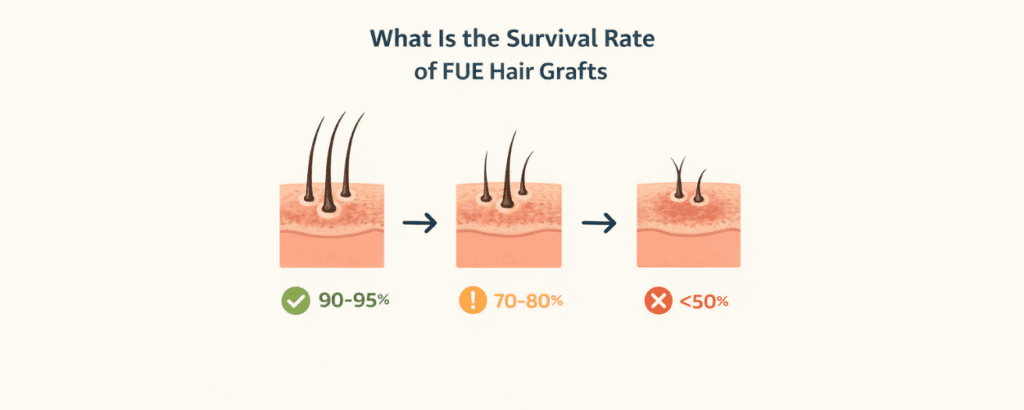
- Graft survival rate – a high proportion of surviving grafts ensures even, consistent density rather than patchy coverage
“The standard I apply to every result is simple: would I be able to tell, looking at this patient’s hairline, that they have had a transplant? If the answer is yes, we have not done our job properly. When an afro hair transplant is executed correctly, the answer should always be no. The hair grows in the right direction, the curl is natural, the density is consistent. It just looks like their hair.”
— Darryl King, CEO, Capital Hair Restoration
Your Next Step
To see real afro hair transplant results and discuss what your own transformation could look like, book a free consultation at Capital Hair Restoration. Clinics available at Harley Street, London, Chelmsford, Cambridge, Guildford, Reading, Watford, Portsmouth, and Southampton.



Book Your Free Hair Transplant Consultation
Fill in your details and we'll get in touch with you shortly.