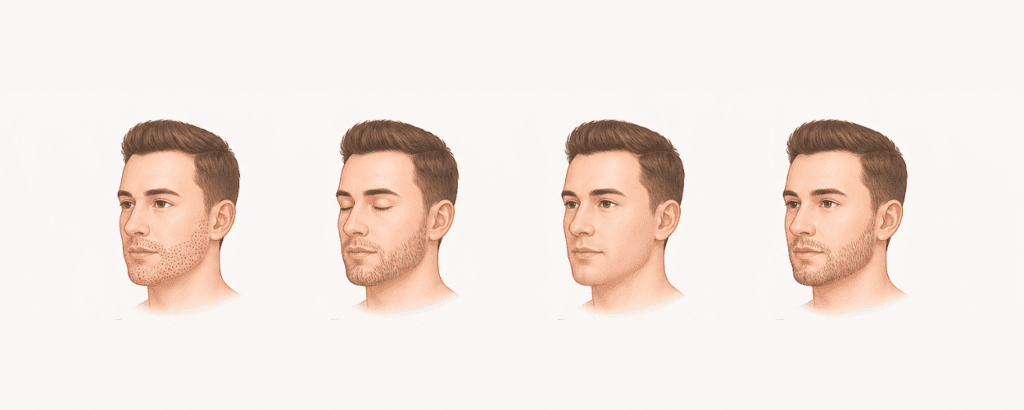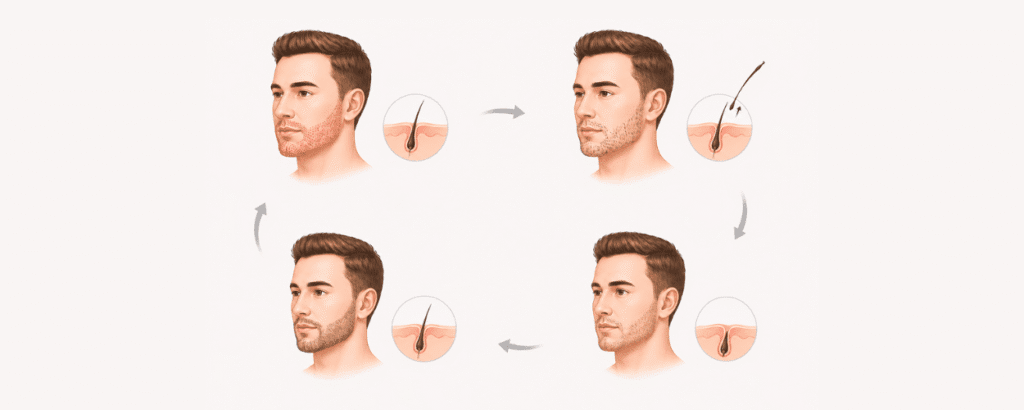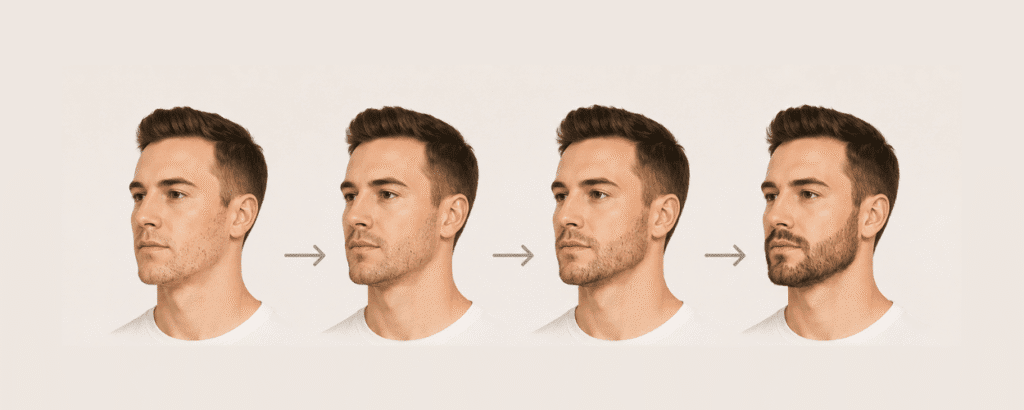



How to Care for Your Beard Transplant After Surgery
How to Care for Your Beard Transplant After Surgery

How to Care for Your Beard Transplant After Surgery
Beard transplant aftercare plays a major role in the quality of your final result.
A well-performed procedure provides the foundation for a natural-looking beard, but the way you care for the grafts during recovery has a direct impact on healing, graft survival, and long-term growth.
The first few days are particularly important because the transplanted follicles are still settling into place and can be damaged if handled incorrectly. Understanding what to do, what to avoid, and what is considered normal during recovery helps the healing process progress as smoothly as possible.
In this guide, we explain exactly how to care for your beard transplant after surgery, from the first 24 hours through to the point where normal grooming routines can safely resume.
The First 24 Hours After a Beard Transplant
The first 24 hours are the most critical part of beard transplant recovery.
During this stage, the grafts are sitting within the recipient sites but are not yet fully anchored into the skin. Friction, pressure, or unnecessary contact can dislodge them.
The Most Important Rules
During the first 24 hours:
- Do not touch the grafts
- Do not scratch the beard area
- Avoid rubbing the face
- Keep pressure away from the graft sites
- Rest as much as possible
Even light contact can disturb freshly implanted follicles.
“The first few days after a beard transplant are absolutely critical for graft survival. Good aftercare is not optional. It is a direct part of achieving the final result.”
— Darryl King – Hair Transplant Consultant – Capital Hair Restoration
How Should You Sleep After a Beard Transplant?
Sleeping position is extremely important during the first few nights.
You should:
- Sleep on your back
- Keep your head elevated using extra pillows
- Avoid sleeping face down
- Avoid sleeping on your side if it presses against the beard area
Keeping the head elevated helps reduce swelling and prevents accidental contact with the grafts while sleeping.
If you are not used to sleeping on your back, it is worth practising before the procedure.
Can You Drink Alcohol After a Beard Transplant?
Alcohol should be avoided for at least the first 48 hours after surgery.
Alcohol can:
- Increase swelling
- Increase bleeding
- Affect blood circulation
- Interfere with medication
Staying hydrated with water instead is the better approach during early recovery.
Can You Smoke After a Beard Transplant?
Smoking should ideally be avoided for at least 48 to 72 hours after surgery, and preferably longer.
Smoking restricts blood flow to the skin, which can negatively affect healing and graft survival during the most critical recovery period.
What Should You Eat After a Beard Transplant?
There are no strict dietary restrictions after a beard transplant, but recovery is generally supported by:
- Good hydration
- Nutritious meals
- Adequate protein intake
- Reduced processed foods
- Lower salt intake during the first few days
A light, healthy meal after surgery is usually ideal.
What Medication Should You Take?
If your clinic prescribes medication, take it exactly as instructed.
This may include:
- Antibiotics
- Anti-inflammatory medication
- Saline sprays
- Specific aftercare products
Avoid taking aspirin or ibuprofen unless specifically advised by your surgeon, as these can affect blood clotting.
Days 2 to 5: Protecting the Scabs
From day two onwards, small scabs begin forming around each graft site.
This is completely normal and is part of the natural healing process.
The scabs protect the healing follicles beneath them, which means they should never be picked, scratched, or forcefully removed.
“One of the most common mistakes patients make during recovery is touching or picking at the grafts too early. Patience during the healing phase is one of the biggest factors in protecting the result.”
— Steven Ambrose – Hair Transplant Consultant – Capital Hair Restoration
How to Wash Your Beard After a Beard Transplant
Washing the beard area correctly is one of the most important parts of early aftercare.
During days two to five:
- Use lukewarm water only
- Use the cleanser recommended by your clinic
- Apply gently using pouring or dabbing motions
- Avoid rubbing the skin
- Avoid direct shower pressure
The goal is to keep the area clean without disturbing the grafts.
What to Avoid During the First Week
During the first week, avoid:
- Touching the grafts
- Scratching scabs
- Heavy exercise
- Swimming
- Steam rooms or saunas
- Direct sunlight
- Smoking
- Alcohol
- Direct shower pressure
- Shaving the beard area
These restrictions help protect the follicles while they establish themselves.
Days 5 to 10: As the Scabs Begin Clearing
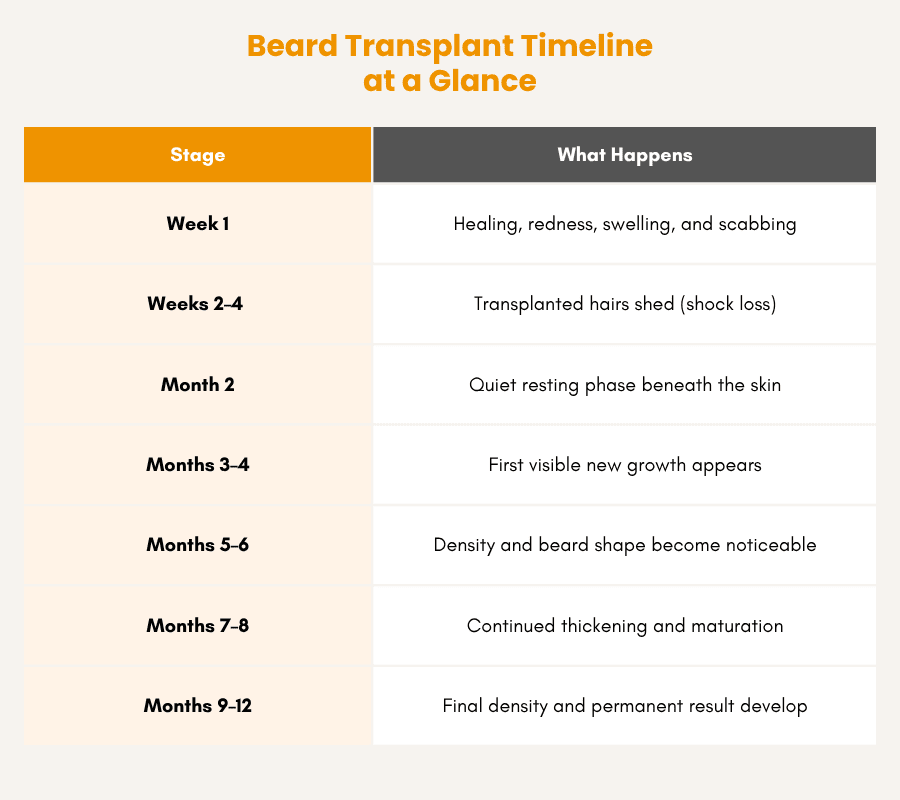
From around day five onwards, the scabs begin softening and naturally falling away.
Most patients find that the majority of scabs clear by days seven to ten.
Should You Remove Beard Transplant Scabs?
No.
Scabs should never be forcefully removed.
They can usually be softened gently using saline solution or the specific aftercare solution recommended by your clinic. Once loosened naturally, they will gradually fall away on their own.
Pulling scabs off early risks removing grafts with them.
“Most beard transplant recovery stages are temporary and completely normal, including redness, scabbing, and shock loss. Understanding the timeline properly makes the whole process far less stressful for patients.”
— Darryl King – Hair Transplant Consultant – Capital Hair Restoration
What Is Normal After a Beard Transplant?
The following symptoms are usually completely normal during recovery:
Normal Recovery Signs
- Mild redness
- Swelling
- Tiny scabs
- Itching
- Tightness
- Mild tenderness
- Shock loss
- Temporary patchiness
These symptoms improve gradually over time.
What Is NOT Normal?
You should contact your clinic if you experience:
- Increasing pain
- Significant bleeding
- Pus or discharge
- Fever
- Severe swelling
- Worsening redness
- Signs of infection
Complications are uncommon, but anything outside the normal recovery process should be assessed promptly.
Weeks 2 to 4: Returning to Normal Activity
Once the scabs have cleared, the most delicate stage of recovery is largely over.
Most patients can gradually return to normal daily routines during weeks two to four, although some restrictions still apply.
When Can You Exercise After a Beard Transplant?
Heavy exercise should usually be avoided for at least two weeks.
This includes:
- Gym training
- Running
- Boxing
- Contact sports
- Intense cardio
Sweating and elevated blood pressure can interfere with healing during the early recovery period.
Light walking is usually fine earlier on.
When Can You Swim After a Beard Transplant?
Swimming should generally be avoided for at least four weeks.
This includes:
- Swimming pools
- Hot tubs
- The sea
- Lakes
Chlorine and bacteria increase infection risk during recovery.
Can You Go in the Sun After a Beard Transplant?
Direct sun exposure should be avoided for at least four weeks, ideally longer.
The treated skin is highly sensitive during healing and can react badly to UV exposure.
Once outdoors regularly again:
- Use high-factor sunscreen
- Avoid prolonged direct sunlight
- Wear protection where possible
When Can You Shave After a Beard Transplant?
Most patients are advised not to shave the beard area for around four weeks.
Shaving too early can irritate the skin and damage healing follicles.
When shaving is eventually resumed:
- Use a clean razor
- Shave gently
- Avoid aggressive pressure
- Introduce trimming gradually
Weeks 4 to 8: The Shock Loss Phase
Around weeks two to four, most patients begin experiencing shock loss.
This is where the transplanted hairs shed before new growth begins.
Although it can feel alarming, shock loss is completely normal and does not mean the transplant has failed.
The follicles remain healthy beneath the skin and begin producing new permanent hairs over the following months.
How to Manage Shock Loss
The best approach during shock loss is patience.
There is no product or treatment that can prevent the shedding phase completely.
The key is simply to:
- Continue gentle skincare
- Follow aftercare guidance
- Avoid obsessively checking the mirror
- Trust the recovery process
Most new growth begins around months three to four.
Month 2 and Beyond: Long-Term Aftercare
By month two, most physical healing is complete.
The skin has usually settled, the scabs are gone, and normal skincare routines can largely return.
Can You Use Beard Oil After a Beard Transplant?
In most cases, beard oils and grooming products can be introduced from around month two onwards, depending on your clinic’s guidance.
These products can help:
- Hydrate the skin
- Soften new growth
- Improve comfort during regrowth
When Can You Trim the Beard?
Light trimming usually becomes possible from around months three to four when new growth starts emerging.
During the early growth phase:
- Scissors are often safer than clippers
- Avoid aggressive trimming
- Be gentle around treated areas
As the beard matures, normal grooming routines gradually resume.
Does Sun Protection Still Matter?
Yes.
Sun protection remains important throughout the first year after a beard transplant.
Healing skin can remain more sensitive to UV exposure for several months, particularly during spring and summer.
Using sunscreen regularly helps protect both the skin and developing follicles.
A Quick Beard Transplant Aftercare Summary
First 24 Hours
- Do not touch grafts
- Sleep elevated
- Avoid alcohol
- Avoid smoking
- Rest
Days 2 to 5
- Wash gently
- Protect scabs
- Avoid rubbing
- Avoid direct shower pressure
Days 5 to 10
- Allow scabs to clear naturally
- Continue gentle washing
- Avoid picking
Weeks 2 to 4
- Avoid intense exercise
- Avoid swimming
- Avoid shaving
- Expect shock loss
Month 2 Onwards
- Return to normal skincare
- Introduce grooming products
- Begin gentle trimming gradually
Final Thoughts
A beard transplant can deliver permanent, natural-looking facial hair, but the quality of the final result depends on more than the procedure itself. The recovery period plays an essential role in graft survival, healing, and long-term growth, making good aftercare one of the most important investments you can make in your outcome.
The first few days and weeks require particular attention. Protecting the grafts, avoiding unnecessary irritation, following washing instructions carefully, and respecting activity restrictions all help create the best possible environment for the follicles to establish themselves successfully. While the recovery process can feel slow at times, every stage has a purpose and contributes to the final result.
The good news is that most beard transplant recovery milestones are entirely predictable. Redness settles, scabs clear, shock loss passes, and new growth gradually emerges. Patients who understand what to expect and follow their aftercare guidance closely typically find the process far less stressful and far more rewarding.
If you are considering a beard transplant, Capital Hair Restoration offers consultations across the UK, including London, Portsmouth, Reading, Watford, Cambridge, Chelmsford, Southampton and Guildford.
At Capital Hair Restoration, patients are supported throughout every stage of recovery, from the initial consultation through to the final beard result. Consultations focus on beard design, donor area assessment, graft planning, recovery expectations, and comprehensive aftercare support to help you achieve the strongest possible outcome.
Book your consultation today and take the first step towards a fuller, natural-looking beard.


Book Your Free Hair Transplant Consultation
Fill in your details and we'll get in touch with you shortly.