


Beard Transplant Results Timeline
Beard Transplant Results Timeline
Beard Transplant Results Timeline: When Will You See Growth?
One of the most common questions men ask after a beard transplant is simple: when will I actually start seeing results?
It is a fair question. You have invested time, money, and trust into the procedure, and naturally you want to know when your new beard will begin to appear.
The reality is that beard transplant results develop gradually over the course of a year. The process happens in stages, with each phase looking and feeling very different from the last. Understanding this timeline properly is important because it helps set realistic expectations and prevents unnecessary worry during the quieter stages of recovery.
In this guide, we will walk through the beard transplant timeline month by month, explaining when shedding happens, when new growth begins, when density improves, and when the final result is fully established.
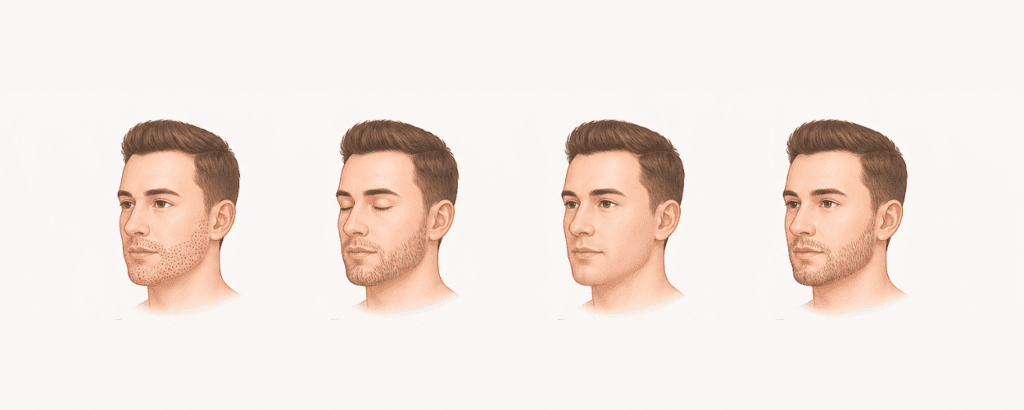
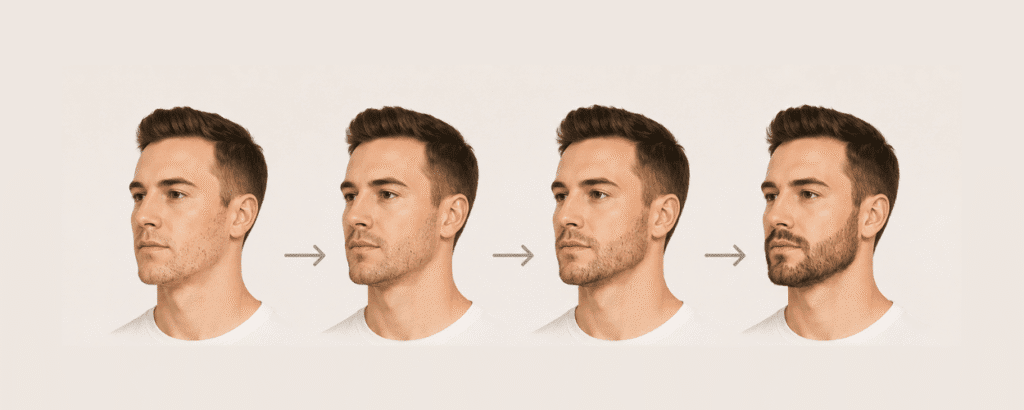
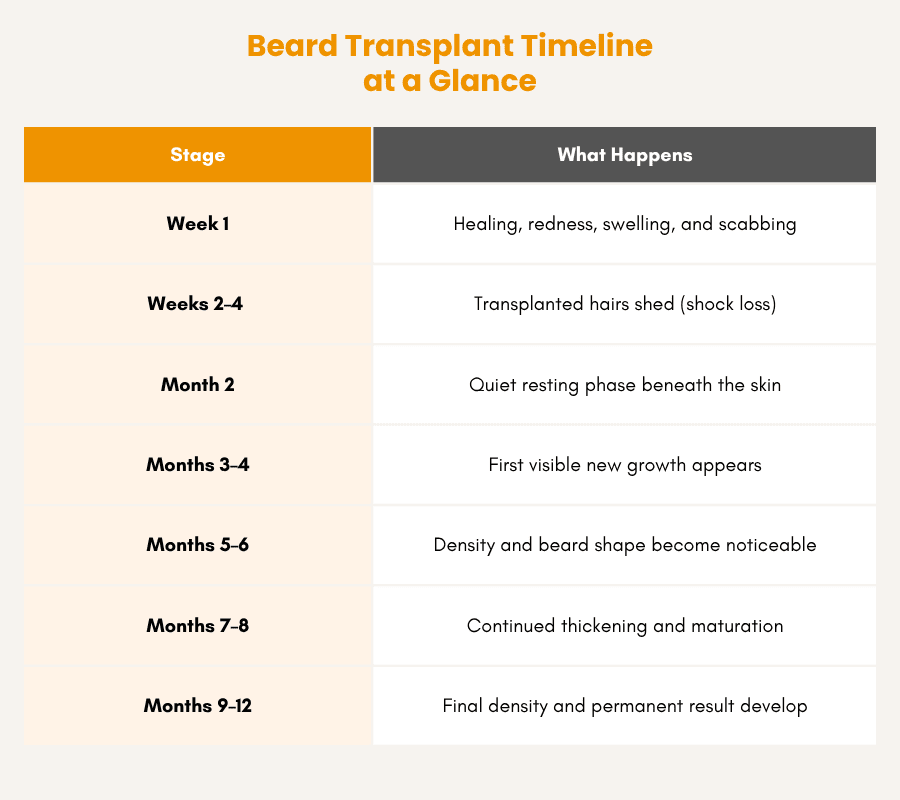
Beard Transplant Timeline at a Glance
Why Beard Transplant Results Take Time
Before looking at the timeline itself, it helps to understand why beard transplant results do not appear immediately.
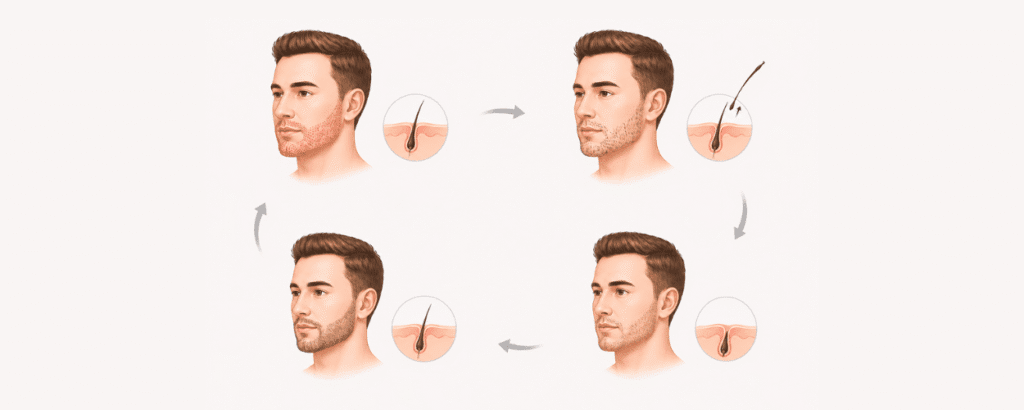
When hair follicles are transplanted into the beard area, they go through a temporary resting phase called the telogen phase. During this stage, the transplanted hairs shed before the follicles begin producing new hair growth.
This process is completely normal and happens because the follicles are adapting to their new environment and restarting the hair growth cycle.
Once new growth begins, the hairs continue to mature over several months. Early hairs are usually finer, softer, and lighter in colour before gradually thickening and blending naturally with the surrounding beard hair.
This is why full beard transplant results typically take around 12 months to fully develop.
“One of the biggest mistakes patients make is expecting beard transplant results too early. The first few months are about healing and follicle recovery. Real visible progress usually starts from month three onwards.”
— Darryl King – Hair Consultant – Capital Hair Restoration
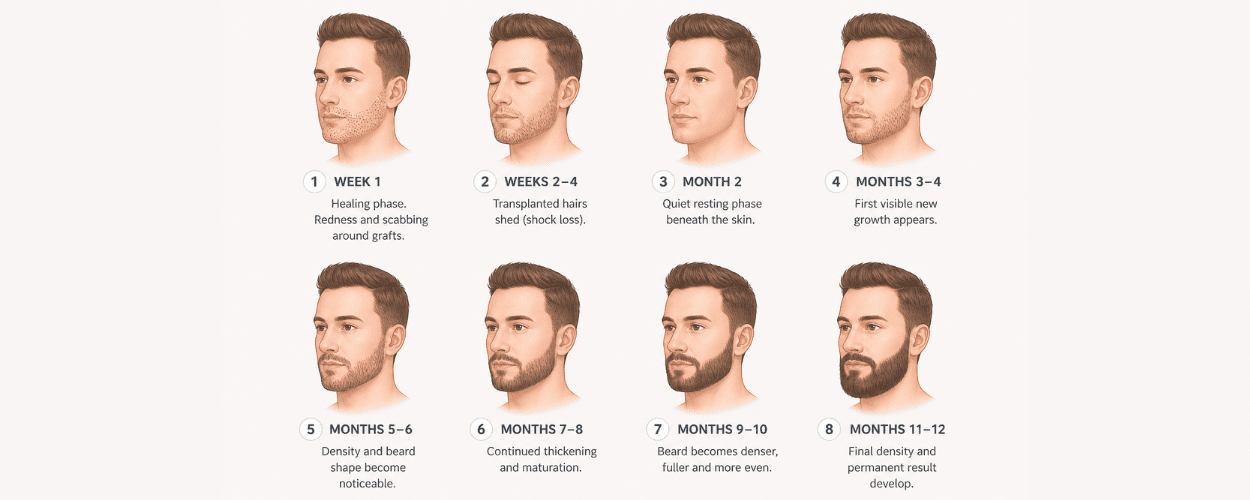
Week 1: Recovery Begins
The first week after a beard transplant is focused entirely on healing.
Small scabs form around each graft, and the treated area may appear red or slightly swollen. The transplanted hairs are visible during this stage, but this is not the beginning of the final result. At this point, the follicles are simply settling into place.
During the first week, patients are advised to:
- Avoid touching or scratching the grafts
- Follow the clinic’s washing instructions carefully
- Avoid strenuous exercise
- Sleep with the head elevated if advised
- Protect the area from direct sunlight
Most redness and visible signs of the procedure begin improving within the first 7 to 10 days.
Weeks 2 to 4: Shedding Phase
This is the stage that surprises many patients if they are not prepared for it.
Around the second or third week, the transplanted hairs begin to shed. This is known as shock loss, and it is an expected part of the beard transplant process.
The important thing to understand is that the follicles themselves remain healthy beneath the skin. Only the visible hair shafts fall out.
By the end of the first month, many patients feel as though they are back to where they started, or occasionally even slightly thinner than before the procedure. This can feel discouraging, but it is entirely normal.
Is Shedding After a Beard Transplant Normal?
Yes. Shedding is completely normal after a beard transplant.
In fact, shedding is usually a positive sign that the follicles are transitioning into a new growth cycle.
Almost all transplanted hairs fall out before new growth begins. The follicles then remain beneath the skin during the resting phase before gradually producing permanent new hairs over the following months.
Patients who understand this process beforehand typically find the recovery journey much less stressful.
“Shedding after a beard transplant is completely normal and is actually part of the process. The follicles remain healthy beneath the skin while preparing to enter a new growth cycle.”
— Steven Ambrose – Hair Consultant – Capital Hair Restoration
Month 2: The Quiet Phase
Month two is often the most psychologically difficult part of the beard transplant timeline.
The healing process is largely complete, but visible growth has not yet started. The skin usually looks normal again, but the new beard is not yet emerging.
At this stage, the follicles are still beneath the skin preparing for the next active growth cycle. Although nothing dramatic appears to be happening externally, important biological changes are taking place underneath the surface.
Many patients spend this phase checking the mirror daily for signs of growth. In reality, patience is the most important thing during month two.
Months 3 to 4: First Signs of Beard Growth
For most patients, months three and four are where the excitement starts to return.
This is when the transplanted follicles begin producing new hairs for the first time. The initial growth is usually:
- Fine
- Soft
- Slightly lighter in colour
- Uneven across the beard area
At this stage, the beard can still look patchy or inconsistent. Some follicles wake up earlier than others, which means growth rarely appears all at once.
This unevenness is completely normal.
The key thing is that visible growth has started. Once the follicles begin producing hair, the beard continues improving month by month.
By the end of month four, most patients can begin to see the outline and overall direction of the final beard design.
Months 5 to 6: Meaningful Progress
Months five and six are where beard transplant results begin looking genuinely noticeable.
The early fine hairs start thickening, darkening, and behaving more like normal beard hair. Coverage becomes more even, density improves, and the beard shape becomes far clearer.
For many patients, month six is the first stage where the beard feels fully real.
The beard can usually be:
- Trimmed
- Styled
- Groomed normally
Patients who previously struggled to grow facial hair often describe this stage as transformative because they are finally able to shape and maintain a beard properly for the first time.
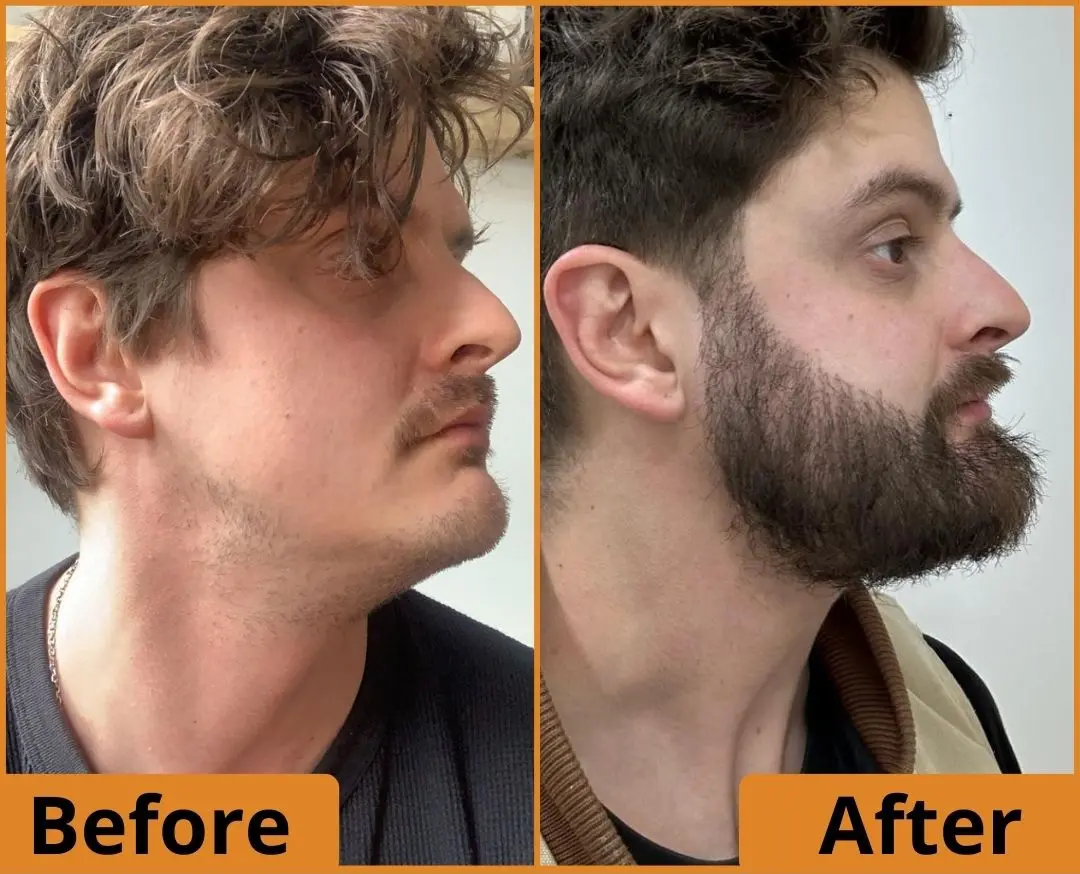
Taking progress photos during this period is worthwhile because the difference between month one and month six is often dramatic.
Months 7 to 8: Thickening and Maturation
By months seven and eight, the vast majority of transplanted follicles are actively growing mature hair.
Any patchiness present in earlier months usually improves significantly during this phase as slower-growing follicles catch up with the rest.
The beard becomes:
- Denser
- More even
- More natural in texture
- Easier to style consistently
At this point, most patients feel fully confident in the outcome and no longer think about the transplant day to day.
The transplanted hairs behave exactly like natural facial hair because they are natural hairs growing from your own follicles.
“By months six to nine, most patients begin seeing the beard they originally imagined. Density improves significantly during this stage, and the hairs start behaving like completely natural facial hair.”
— Darryl King – Hair Consultant – Capital Hair Restoration
Months 9 to 12: Final Beard Transplant Results
Months nine to twelve represent the final maturation phase.
The beard reaches its permanent character, with the hairs becoming thicker, stronger, and fully integrated into the surrounding facial hair.
By month twelve, most patients have reached their final result.
This is the point where the beard can be properly assessed for:
- Final density
- Beard shape
- Coverage
- Natural appearance
For most men, no further treatment is required. In some cases, patients may choose to add additional density with a second procedure, but this depends on the original goals and donor hair availability.
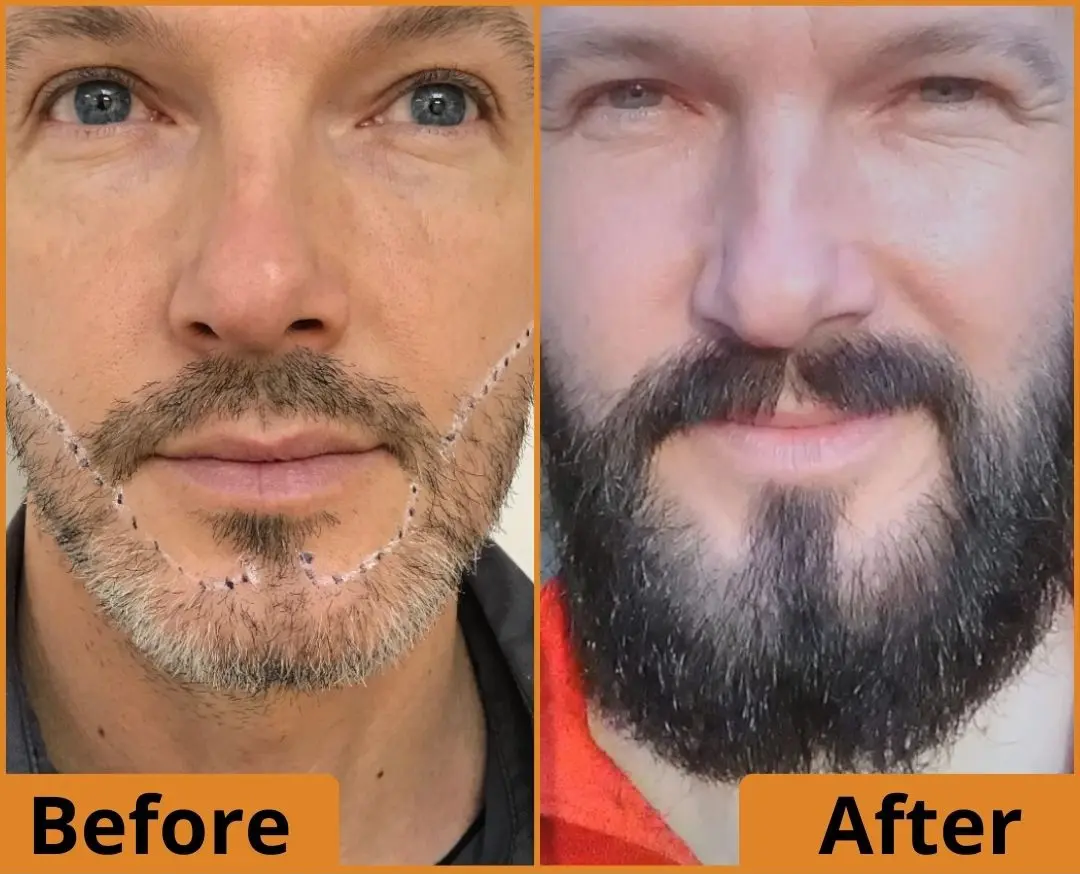
Importantly, beard transplant results are permanent.
The transplanted follicles continue growing for life, with no ongoing maintenance procedure required.
What Affects How Quickly Beard Transplant Results Develop?
Although the general timeline is similar for most patients, several factors can influence how quickly results appear.
Hair Characteristics
Men with thicker, coarser donor hair often see visually stronger results earlier because each hair provides more coverage.
Procedure Size
Larger procedures involving more grafts may create a more dramatic visual change throughout the timeline.
Individual Biology
Some patients naturally grow hair faster than others. This affects how quickly follicles emerge and mature after transplantation.
Recovery and Aftercare
Following proper aftercare instructions plays an important role in supporting healthy graft healing and optimal growth conditions.
When Should You Worry About Beard Transplant Growth?
In most cases, slower growth does not mean anything is wrong.
Some follicles naturally emerge later than others, and improvement can continue beyond the one-year mark for certain patients.
However, if you have concerns about healing, infection, or growth progression, it is always best to speak directly with your clinic so they can assess your recovery properly.
Final Thoughts
Beard transplant results do not appear overnight, but that is exactly what makes them look so natural. The transplanted follicles follow the same biological growth cycle as any other hair, progressing through healing, shedding, regrowth, and maturation before the final result is revealed.
While the first few months can test your patience, particularly during the shedding and resting phases, each stage is a normal part of the journey. For most patients, the first signs of meaningful growth appear between months three and four, with density, coverage, and beard maturity continuing to improve throughout the remainder of the year.
By the 12-month mark, the vast majority of patients have achieved a permanent, natural-looking beard that can be trimmed, styled, and maintained exactly like normal facial hair. Understanding the timeline in advance helps remove unnecessary worry and allows you to focus on the long-term result rather than the short-term stages of recovery.
If you are considering a beard transplant, Capital Hair Restoration offers consultations across the UK, including Brentwood, Bristol, Bromley, Chelmsford, Ipswich, Milton Keynes, Oxford and Tunbridge Wells.
Thinking about a beard transplant?
At Capital Hair Restoration, consultations focus on realistic beard design, donor area assessment, graft planning, recovery expectations, and long-term natural results. Our experienced team will assess your beard growth, explain what is achievable in your case, and create a personalised treatment plan tailored to your goals.
Book your consultation today and take the first step towards a fuller, natural-looking beard.


Book Your Free Hair Transplant Consultation
Fill in your details and we'll get in touch with you shortly.